GaN’s Technological Superiority: How EPC is Winning Against MOSFETs in Power Conversion
GaN Talk – Maurizio Di Paolo Emilio
Feb 05, 2026
This article orginally appeared on EE Times.
The power MOSFET market is large and well established, and is expected to reach a value of around $14 billion by 2027. It is generally divided into three voltage segments: below 40 V, 40–200 V, and above 600 V. The segment below 200 V accounts for roughly 75% of the total market. It is in this segment that most of the target applications of Efficient Power Conversion (EPC) are concentrated, including AI servers, 48-V power converters, robotics, and autonomous machines. This makes it a crucial battleground for the adoption of GaN technology. By focusing on higher efficiency, increased power density, and simpler system design, GaN technology is increasingly positioning itself as a viable replacement for silicon in modern power conversion systems.
Powering the AI Era
AI is having a huge impact on how servers and data centers are set up. Due to increasing computational complexity and thermal restrictions, power designers are being pushed to move beyond obsolete silicon-based parts. AI power conversion is commonly called a "apex predator" application since it rewards even the smallest improvements in performance. GaN's better efficiency and smaller size are changing how designs are built at all voltage levels in this very competitive market.
EPC maps its GaN solutions onto the Open Rack V3 style architecture, identifying the following strategic layers: AC‑DC and PFC front end: EPC’s 150 V, 200 V devices have a growing share of the primary side of LLC and related topologies for isolated front‑end conversion. 48 V to 12 V (or 6–8 V) intermediate conversion: 25 V and 15 V devices are in particular positioned to “tip” the secondary side from MOSFETs to GaN, where losses are a large fraction of the total and highly performance. The primary side is already predominantly 100 V GaN-based.
At system level, EPC is advancing high‑voltage to low‑voltage power delivery through Input‑Series, Output‑Parallel (ISOP) topologies. Demonstrated configurations converting from 800 V to 48 V or 12 V show efficiencies exceeding 98% using magnetically integrated transformers and GaN transistors. These results underline the scalability of GaN-based systems for rack-level and distributed power applications, an approach now validated by EPC’s role as a GaN supplier to NVIDIA for next-generation 800 V AI power architectures. GaN’s ability to operate effectively at elevated voltages and frequencies gives it a decisive advantage where silicon MOSFETs meet hard physical limitations - an advantage increasingly being exploited in hyperscale AI systems and high-density data-center power delivery.
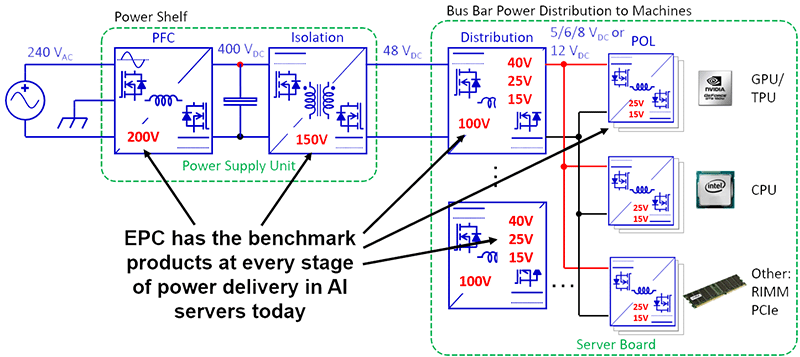 Figure 1: Open Rack Version v3 Architecture
GaN for Humanoids, Drones, and Autonomous Machines
EPC is also working on humanoid robots, industrial drones, and autonomous machines that push the limits of dynamic motion and efficiency. EPC's integrated GaN power stages and motor control ICs use fast transistors and smart gate driving and protection features to make small modules that work best with 48 V brushless DC motors. The benefits are clear: they take up less space, weigh less, and have a wider control bandwidth. GaN works at frequencies close to or above 100 kHz, which makes it more efficient and responsive than with lower-frequency designs using MOSFETs.
GaN makes it possible to better use energy and fit things together more tightly in robotic joints, fingers, and limbs, where torque density and heat dissipation are very important. EPC is helping designers make humanoid and industrial robots work better and be more independent by giving them motor drives that are both efficient and scalable.
Extending Efficiency Beyond Earth
EPC also works in space communications and aerospace systems with its EPC Space division, where reliability and efficiency are very important. The company is adding more radiation-resistant GaN devices to its line to support satellite constellations and communication platforms that need to be very reliable.
GaN is an important technology for the next generation of satellites because it set new standards for efficiency, durability, and size. This is especially important as the global communications network becomes more reliant on orbiting constellations.
Redefining the Limits of Power Electronics
In a market that has been ruled by MOSFETs for a long time, EPC sees GaN as a game-changing technology for current power systems. The technology always gives better efficiency, integration, and performance where silicon has hit its limits, from AI servers to humanoid robots to space platforms. The direction of the industry is clear: GaN will continue to set the standard for next-generation conversion designs as power needs grow and form factors shrink.