Gallium Nitride in Professional Audio: From Early Adoption to System-Level Advantage
GaN Talk – Maurizio Di Paolo Emilio
Feb 18, 2026
The professional audio industry has traditionally prioritized reliability, predictable lifecycles, and long-term product stability when evaluating new semiconductor technologies. As a result, emerging device platforms are typically introduced only after their electrical performance and robustness are well understood.
Against this backdrop, Markus Bätz, CEO and co-founder of Innosonix, made the decision to transition from silicon to gallium nitride (GaN) power devices as early as 2020 - several years before GaN became widely discussed within professional audio circles.
 Markus Batz, CEO and co-founder, Innosonix
Early Adoption and EPC Partnership
"At the time, we were looking for a new platform for mid- to low-power professional amplifiers, roughly 50 to 300 watts per channel," Bätz explained. "We needed something that would work well with our ±60 V rails, and that's when we found EPC's 150 V devices. The EPC2059 was almost a perfect electrical fit."
What followed was not only a technology transition, but a shift in how the company approached amplifier design. Unlike many traditional semiconductor vendors, EPC provided open access to datasheets, application notes, and detailed reliability reports.
"Everything was online, everything was documented," Bätz said. "For a small company like ours, that mattered a lot."
That openness, combined with direct engagement from EPC's engineering team, created the confidence needed to adopt GaN at a time when many audio manufacturers were still hesitant.
Technical Advantages of GaN in Class-D Audio
In high-performance Class-D audio, the choice of switching device directly impacts key sonic metrics. eGaN FETs offer several critical advantages over silicon MOSFETs:
- Lower conduction losses
- Much faster switching transitions
- Zero reverse-recovery charge
- Significantly lower gate charge for given on-resistance
- Very low output capacitance
These characteristics allow designers to raise PWM frequency, shorten dead time, and more closely approximate the ideal digital power waveform at the output stage. This combination reduces open-loop distortion caused by propagation delay, dead-time, and diode recovery effects, while simultaneously cutting switching losses that would otherwise demand larger heatsinks.
The shorter turn-on and turn-off delays and steeper edges enable both lower THD+N and reduced transient intermodulation distortion (T-IMD) with lighter overall feedback. EPC's published reference designs demonstrate THD+N figures below 0.005% and SNR above 120 dB using GaN-based Class-D stages.
At the heart of the Innosonix’s success is an engineering philosophy focused on real-world performance. GaN technology didn’t just improve one parameter - it changed the entire design approach.
"The main advantage is that we can operate at higher switching frequencies without huge losses," noted Bätz. "That lets us shrink size, increase efficiency, and improve loop performance, which in turn helps audio quality."
While total harmonic distortion (THD) improvements were modest - since installation-grade speakers often dominate perceived quality - the gain in efficiency, thermal management, and density was significant.
Design Choices and Trade-offs
The design strategy deliberately prioritizes minimizing switching losses rather than conduction losses, leveraging the very low output capacitance and essentially zero reverse-recovery charge of GaN devices. This approach matches the high crest-factor nature of audio signals, where peak currents are short-lived and the average thermal load is comparatively moderate.
"Audio has such a high crest factor that optimizing purely for conduction losses doesn't make sense," Bätz explained. "Switching losses dominate, so devices like the EPC2207 actually perform better overall."
As a result, EPC2207 has become the preferred choice for lower-power channels, while EPC2307 supports higher-power designs in the kilowatt range.
However, the intrinsic speed of GaN devices requires careful management. "We actually had to slow the devices down a bit with additional gate resistance," Bätz noted. "Otherwise, the switching edges were polluting the analog modulator. In the end, we gave up some raw speed to make the whole system behave."
Another deliberate trade-off involved dead time. While hard-switching with minimal dead time could have improved distortion figures, it would have significantly increased idle losses. "Idle consumption was far more important to us," Bätz said. "We wanted a green solution, not just a great datasheet."
On the PCB integration side, the shift from chip-scale (wafer-level) packages to QFN variants in more recent projects simplifies assembly and improves thermo-mechanical robustness while preserving the low parasitic inductance needed for fast, clean switching. EPC's guidelines on stencil design, solder paste volume, and thermal-cycling behavior have been critical to achieving high long-term reliability (Figure 1).
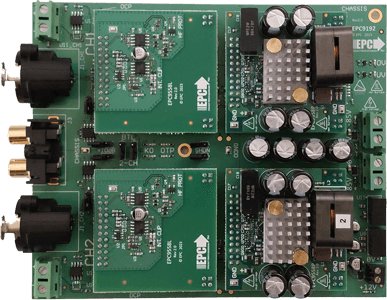 Figure 1: EPC9192: 2 x 700 W/4 Ω Class-D Amplifier Evaluation Board using EPC2307
System-Level Benefits and Markets
Today, every amplifier product in the company's portfolio is GaN-based, the LP² range for example delivers 32 amplifier channels in a single 1U rack enclosure - a level of density that would be extremely difficult to achieve with silicon.
"That density is not a nice-to-have - it's the whole value proposition," Bätz explained. With all channels active, total idle power consumption remains below 100 W, dramatically reducing heat dissipation and cooling requirements.
This capability has unlocked new markets. High-channel-count, space-constrained environments such as superyachts, luxury residences, and large theaters have emerged as key application areas. “On a yacht, rack space is incredibly expensive,” He said. “No one wants to dedicate more room than absolutely necessary to technical equipment.”
In theaters and large installations, the benefits are equally tangible. Lower heat output reduces HVAC demands, simplifies retrofits, and lowers total cost of ownership.
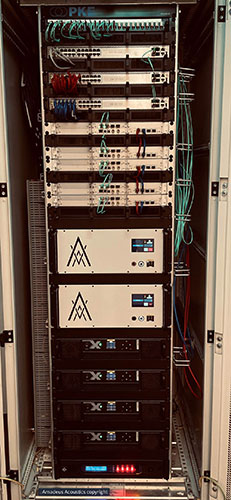 Figure 2: Amadeus Acoustics in Vienna theater
These amplifiers now power high-end systems aboard luxury yachts, as well as professional commercial audio visual installations worldwide.
The company's Micro Maxx Series, recently launched in both PoE and mains-powered versions, uses the same GaN-based amplifier core but targets broader, more cost-sensitive markets (Figure 2,3).
Reliability Lessons
The transition to GaN was not without setbacks. Early reliability issues emerged - not due to device weaknesses, but because of process-related factors unfamiliar to teams accustomed to silicon packages.
"We had some pretty bad reliability in the first years, and that was one hundred percent on us," Bätz admitted. "Stencil design, solder paste selection, exact paste volume - everything matters with chip-scale GaN devices."
Thermal stress management also required a new mindset. Once these factors were addressed, long-term testing showed excellent robustness, even under aggressive overload conditions.
While the company's installed base - around 25,000 audio channels so far - is still too small to derive statistically meaningful failure rates in ppm, field experience has been encouraging. EPC's detailed reliability reports played a key role in accelerating this learning process. "If you actually read and understand the documentation, most of the pitfalls are already described," Bätz added.
Future Outlook
Looking ahead, devices such as EPC2304 are opening doors to GaN-based power supplies, including LLC converters and multi-level PFC architectures.
"This is where things get really interesting," Bätz said. "GaN isn't just about the amplifier anymore - it's about the entire power architecture."
EPC will still be very important to Innosonix's future plans. Bätz said, "It's clear that we should use the newest technology." "That's in our DNA: we aren't afraid to try new things.
Richard Van Nairn, Innosonix's Sales Director adds that the partnership is important not only for technology but also for culture: "As we grow, we want to grow alongside EPC."
Innosonix shows what happens when engineering curiosity meets next-generation semiconductor innovation. They make the world's most exclusive marine sound systems and push the limits of efficiency in professional audio.
For professional audio, GaN may not be about the numbers that show how much distortion there is. Instead, its real effect is that it makes systems smaller, cooler, and more efficient, which is slowly changing how amplification is designed, built, and used.
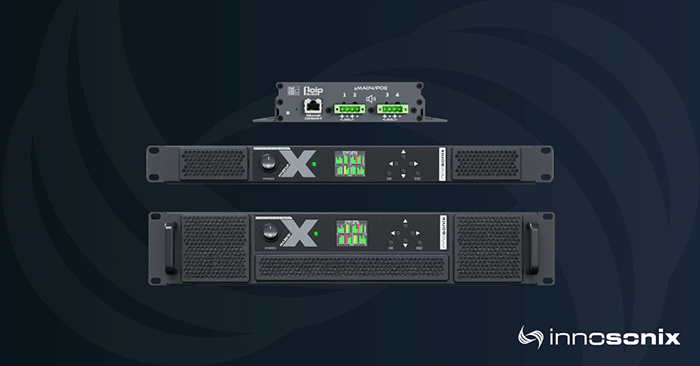 Figure 3: Micro Maxx Series
References
- EPC Corporation. GaN for Audio. https://epc-co.com/epc/applications/gan-for-audio
- Innosonix GmbH. (2020). Pioneering GaN Amplifier Technology Since 2020. https://www.innosonix.de/blog/pioneering-gan-technology-advancements-since-2020
- Next generation Audio Amplifiers with EPC GaN FETs, Tiziano Morganti
- GaN Power Devices for Efficient Power Conversion, Fourth Edition - by Alex Lidow, Michael de Rooij, John Glaser, Alejandro Pozo Arribas, Shengke Zhang, Marco Palma, David Reusch, Johan Strydom.